Refinancing your loan can be a powerful financial move—potentially saving you thousands of dollars and years of payments. But it's not always the right choice for everyone. Let's explore when refinancing makes sense, how to do it, and common pitfalls to avoid.
What Is Refinancing?
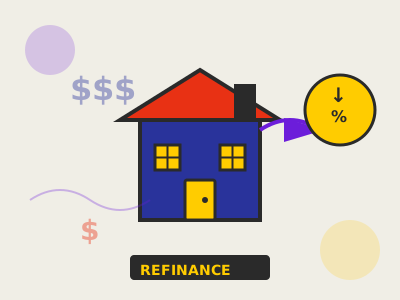
Refinancing means replacing your existing loan with a new one, ideally with better terms. You're essentially taking out a new loan to pay off the old one. The new loan should offer:
- A lower interest rate
- Lower monthly payments
- A shorter loan term
- Or a combination of these benefits
📌 Key Point
Refinancing is different from consolidation. Refinancing replaces one loan with another at better terms. Consolidation combines multiple loans into one, which may or may not improve your terms.
When Refinancing Makes Sense
1. Interest Rates Have Dropped
The most common reason to refinance is when market interest rates fall below your current rate.
Rule of Thumb:
If you can reduce your rate by at least 0.75% to 1%, refinancing is typically worth considering. For larger loans (like mortgages), even 0.5% can be worthwhile.
2. Your Credit Score Has Improved
If your credit score has increased significantly since you took out the original loan, you may qualify for better rates now.
- Score jumped 50+ points? Check refinance options
- Paid off other debts reducing your debt-to-income ratio
- Removed negative items from your credit report
3. You Want Lower Monthly Payments
If you're struggling with cash flow, refinancing to extend your loan term can reduce monthly payments. However, note that you'll likely pay more in total interest over time.
Example:
$30,000 loan at 8% for 5 years = $608/month
Refinance to 7 years at 7% = $459/month
Savings: $149/month (but $2,268 more in total interest)
4. You Want to Pay Off Debt Faster
Conversely, if your financial situation has improved, refinancing to a shorter term with a lower rate can save you significantly in interest.
5. You Have an Adjustable-Rate Loan
If you have an ARM (Adjustable-Rate Mortgage) or variable-rate loan and rates are rising, refinancing to a fixed rate can provide stability and potentially save money.
When NOT to Refinance
❌ Avoid Refinancing If:
- You're near the end of your loan: Most interest is paid early in the loan term
- Closing costs exceed savings: If you won't recoup costs before moving or selling
- Your credit has worsened: You'll likely get worse terms
- You plan to move soon: Won't have time to benefit from the new terms
- You have prepayment penalties: The fee might outweigh benefits
Understanding Refinancing Costs
Refinancing isn't free. Common costs include:
- Application fee: $75-$300
- Origination fee: 0.5%-1% of loan amount
- Appraisal fee: $300-$500 (for home/auto loans)
- Title search & insurance: $700-$900 (mortgages)
- Credit report fee: $25-$50
Total costs typically range from 2%-6% of the loan amount for mortgages, less for other loan types.
Calculate Your Break-Even Point
Divide refinancing costs by monthly savings to find how long until you break even:
Break-Even = Total Costs ÷ Monthly Savings
Example: $3,000 in costs ÷ $150 monthly savings = 20 months to break even
Types of Loans You Can Refinance
🏠 Mortgage
Most common refinance. Can switch from 30-year to 15-year, from ARM to fixed, or cash-out equity.
Typical savings: $100-$300/month
🚗 Auto Loan
Can refinance if rates drop or credit improves. Some lenders specialize in auto refinancing.
Typical savings: $30-$100/month
🎓 Student Loans
Private loans can be refinanced. Federal loans can too, but you'll lose federal protections.
Typical savings: $50-$200/month
💳 Personal Loans
Can consolidate credit card debt or refinance existing personal loans for better rates.
Typical savings: $25-$75/month
The Refinancing Process
- Check your credit score - Know where you stand before applying
- Shop around - Get quotes from 3-5 lenders within a 14-45 day window (counts as single credit inquiry)
- Calculate total costs - Include all fees, not just the interest rate
- Compare APRs - Annual Percentage Rate includes fees, giving a true comparison
- Gather documents - Pay stubs, tax returns, bank statements, current loan info
- Submit application - Apply with your chosen lender
- Lock your rate - Once approved, lock in the rate (usually 30-60 days)
- Close the loan - Sign paperwork and pay closing costs
💡 Expert Tip
Don't just look at the interest rate—compare the APR (Annual Percentage Rate) which includes fees. A loan with a slightly higher rate but lower fees might actually cost less overall.
Common Refinancing Mistakes
Extending the loan term too much
Lower payments feel good, but you'll pay significantly more interest over time.
Ignoring closing costs
These can negate savings if you don't stay in the loan long enough.
Not checking prepayment penalties
Some loans charge fees for early payoff—this can kill your refinance deal.
Refinancing federal student loans
You'll lose income-driven repayment, forbearance, and forgiveness options.
Real-World Savings Example
Case Study: The Johnson Family
Original Mortgage:
- $250,000 at 4.5% for 30 years
- Monthly payment: $1,267
- Total interest over life: $206,017
After Refinancing (Year 5):
- Remaining balance: $229,000 at 3.25% for 20 years
- Monthly payment: $1,313 (+$46)
- Total interest: $86,120
Total Savings: $67,850 over the life of the loan!
Plus they paid off their home 5 years earlier for just $46 more per month.
Should You Refinance? Quick Checklist
✅ Consider refinancing if:
- ☑ Interest rates are at least 0.75%-1% lower than your current rate
- ☑ Your credit score has improved by 50+ points
- ☑ You'll stay in the loan long enough to recoup closing costs
- ☑ You have no prepayment penalty on your current loan
- ☑ You want to switch from variable to fixed rate
Final Thoughts
Refinancing can be a smart financial move that saves you thousands, but it's not automatic. Run the numbers carefully, consider your long-term plans, and shop around for the best deal.
The key is to be strategic: refinance when the math makes sense and the terms align with your financial goals. Don't refinance just because rates dropped—make sure the total package actually benefits you after all costs are considered.