You check your credit app, and your score has dropped three points. You didn't miss a payment. You didn't apply for a new card. You just... existed. It feels like a black box sometimes, doesn't it? While the exact algorithms (FICO, VantageScore) are proprietary secrets guarded like the Colonel's recipe, the ingredients are actually public knowledge. And knowing them is the difference between blindly hoping for a loan approval and walking into the bank with swagger.
The Secret Sauce: What Actually Makes Up Your Score?
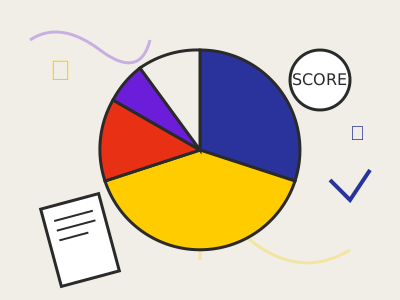
Your credit score isn't just one big number; it's a weighted average of five specific behaviors. According to FICO, which is used in over 90% of lending decisions, here is the exact breakdown:
🏆 Payment History (35%)
The heavyweight champion. Did you pay on time? Even one payment late by 30 days or more can tank your score significantly.
⚖️ Amounts Owed (30%)
Also called "Credit Utilization." Ideally, keep this under 30%. The lending elite often keep it under 10%.
📅 Length of Credit History (15%)
Older accounts are better. They show a long track record. This considers your oldest account, newest account, and average age.
🆕 New Credit (10%)
Opening too many accounts in a short time makes you look desperate for cash. Pace yourself.
🎨 Credit Mix (10%)
Lenders like to see you can juggle different types of balls—revolving debt (credit cards) and installment debt (mortgages/auto loans).
💡 Pro Tip: The "Aziz Rule"
Don't just pay once a month. Log in and pay your credit card balance every two weeks (or every payday). This artificially keeps your reported utilization low, even if you put all your expenses on the card for points.
Lender Notices: When to Panic (and When to Chill)
You get a letter in the mail from a bank. Panic sets in. Should you be worried? It depends entirely on what kind of notice it is.
1. The "You're Pre-Approved!" Notice
Impact: None. Zero. Zip.
Banks scan credit reports to find people they want to sell products to. This is a "soft inquiry." Only you can see it on your report. It does not affect your score. Shred it or read it, but don't sweat it.
2. The "Adverse Action" Notice
Impact: Indirect (Minor).
This is the fancy legal term for "you were denied." If you applied for a card and didn't get it, legally they must tell you why. The denial letter itself doesn't hurt you. However, the application credited a "hard inquiry," which might knock 5 points off your score temporarily.
3. The Collection Notice
Impact: Severe.
This is the red alert. If a debt has been sold to a collection agency, it means it's significantly past due. A collection account is a major derogatory mark that can drop a score by 50-100 points instantly.
⚠️ Watch Out
Dispute letters are your friend. If you get a notice about a debt you don't recognize, send a validation letter within 30 days. They are legally required to prove you owe it. If they can't, it must be removed.
The Waiting Game: How Long Do Strikes Last?
If you've made a mistake, you're probably wondering: "When does this fall off my record?" The good news is that nothing lasts forever. The Fair Credit Reporting Act (FCRA) sets strict time limits.
| The "Oops" Item | Time on Report | Score Impact |
|---|---|---|
| Late Payments | 7 Years | Fades over time. The last 2 years matter most. |
| Collection Accounts | 7 Years | Severe. Newer models (FICO 9) ignore paid collections. |
| Chapter 7 Bankruptcy | 10 Years | Nuclear option. Drops score massively but allows a fresh start. |
| Chapter 13 Bankruptcy | 7 Years | Less severe than Ch. 7, but still a major derogatory mark. |
| Hard Inquiries (Checks) | 2 Years | Minor. Only affects score for ~12 months. |
🤔 Myth Buster: High Interest Rates
Users often ask: "Does my 25% APR credit card hurt my score?"
The answer is NO. Your credit report lists your balance and limit, not your interest rate. However, high interest makes it harder to pay off debt, which keeps your utilization high (which does hurt).
Anatomy of a Score: 500 vs. 600 vs. 850
What does a score actually look like "under the hood"? Let's break down three profiles to see the difference.
| Factor | The Struggler (500) | The Rebuilder (600) | The Beacon (850) |
|---|---|---|---|
| Payment History | Recent 90+ day lates or collections. | One 30-day late from 2 years ago. | 100% on-time for 10+ years. |
| Utilization | Maxed out (100%+). | High (50-70%). Carrying balances. | Low (<5%). Pays in full. |
| History | < 1 year. | 3-5 years average. | 20+ years average. |
| Inquiries | Many recent applications. | 1-2 in the last year. | 0 in the last year. |
Real-World Example
Scenario: Buying a 00,000 home (30-year fixed).
- With a 620 Score: 7.5% Interest. Monthly PI&I: ~,100. Total Interest: 55,000.
- With a 760 Score: 6.5% Interest. Monthly PI&I: ~,900. Total Interest: 82,000.
That higher score just saved you 3,000. That's a luxury car or a college fund!
Your Action Plan
- Check your free reports. Go to AnnualCreditReport.com. It's the only government-authorized source. Look for errors, not just your score.
- Become an "Authorized User". Ask a parent or partner with pristine credit to add you to their oldest card. You import their good history (just make sure they don't give you the actual card so you aren't tempted!).
- Don't close old cards. Paid off that starter card? Put it in a drawer (or put a small subscription like Netflix on it with autopay). Closing it hurts your "Average Age of Accounts" and lowers your total credit limit.
Final Thoughts
Building a great credit score isn't about being rich; it's about being boring. It's about consistency. Automate your payments, keep your balances low, and let time do the heavy lifting.
Start today by simply logging into your bank and setting up autopay for the minimum due on every single card. It's the cheapest insurance policy for your financial future.
Sources & References:
- myFICO: What's in your credit score? (Primary data source for percentages)
- Experian: What Affects Your Credit Scores?
- Consumer Financial Protection Bureau: How long does negative info stay on report?