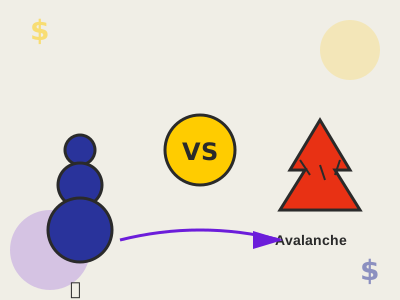
When it comes to paying off multiple debts, two strategies dominate the conversation: the Debt Snowball and the Debt Avalanche methods. Both are proven approaches, but which one is right for you? Let's break down each strategy and help you decide.
The Debt Snowball Method
The Debt Snowball method focuses on paying off your smallest debts first, regardless of interest rate. Here's how it works:
- List all your debts from smallest to largest balance
- Make minimum payments on all debts
- Put any extra money toward the smallest debt
- Once that's paid off, move to the next smallest debt
- Repeat until all debts are eliminated
✅ Pros of Debt Snowball
- Quick wins: Eliminating small debts fast provides psychological motivation
- Momentum building: Each payoff fuels your determination to continue
- Simplicity: Easy to understand and implement
- Behavioral success: Studies show this method has higher completion rates
❌ Cons of Debt Snowball
- May cost more in total interest paid
- High-interest debts continue growing while you focus on small balances
- Not the most mathematically efficient approach
The Debt Avalanche Method
The Debt Avalanche method prioritizes paying off debts with the highest interest rates first. Here's the process:
- List all your debts from highest to lowest interest rate
- Make minimum payments on all debts
- Put any extra money toward the highest-interest debt
- Once paid off, tackle the next highest-interest debt
- Continue until debt-free
✅ Pros of Debt Avalanche
- Saves more money: Minimizes total interest paid
- Mathematically optimal: The most cost-effective strategy
- Faster debt freedom: Can shave months or years off your debt payoff timeline
- Best for disciplined individuals: If you can stay motivated, you'll save the most
❌ Cons of Debt Avalanche
- May take longer to see the first debt eliminated
- Requires more discipline and patience
- Risk of losing motivation if progress feels slow
Side-by-Side Comparison
| Factor | Debt Snowball | Debt Avalanche |
|---|---|---|
| Priority | Smallest balance | Highest interest rate |
| Total Interest Paid | Higher | Lower |
| Motivation | Quick wins, high momentum | Requires discipline |
| Time to Debt-Free | Longer (due to interest) | Shorter (saves interest) |
| Best For | Motivation seekers | Math-minded savers |
Real Example: Sarah's Debt Journey
Let's look at Sarah, who has the following debts:
- Credit Card A: $2,000 at 22% APR
- Credit Card B: $5,000 at 18% APR
- Personal Loan: $8,000 at 12% APR
- Car Loan: $12,000 at 6% APR
Snowball Order
- Credit Card A ($2,000)
- Credit Card B ($5,000)
- Personal Loan ($8,000)
- Car Loan ($12,000)
Total interest: ~$8,500
Time to debt-free: ~48 months
Avalanche Order
- Credit Card A (22% APR)
- Credit Card B (18% APR)
- Personal Loan (12% APR)
- Car Loan (6% APR)
Total interest: ~$7,200
Time to debt-free: ~44 months
In Sarah's case, the Avalanche method would save her $1,300 in interest and get her debt-free 4 months faster!
Which Method Should You Choose?
Choose Debt Snowball if you:
- Need quick wins to stay motivated
- Have struggled with debt in the past
- Have many small debts to eliminate
- Value psychological momentum over maximum savings
Choose Debt Avalanche if you:
- Want to save the most money possible
- Are disciplined and patient
- Have high-interest debt (credit cards, payday loans)
- Prefer the most mathematically efficient approach
The Hybrid Approach
Can't decide? Consider a hybrid strategy:
- Start with Snowball to eliminate 1-2 small debts for quick motivation
- Switch to Avalanche once you have momentum
- Or tackle high-interest debts first, but celebrate each milestone
🎯 Bottom Line
The best debt payoff strategy is the one you'll actually stick with. While Avalanche saves more money mathematically, Snowball has higher success rates due to psychological wins. Choose based on your personality and financial situation—both methods work when you stay consistent!